
Insights · Ways of Working
Beyond Prompting: Why Context Engineering Matters
How we used AI to develop a brand, establish design principles, and build a website without starting from scratch every time.
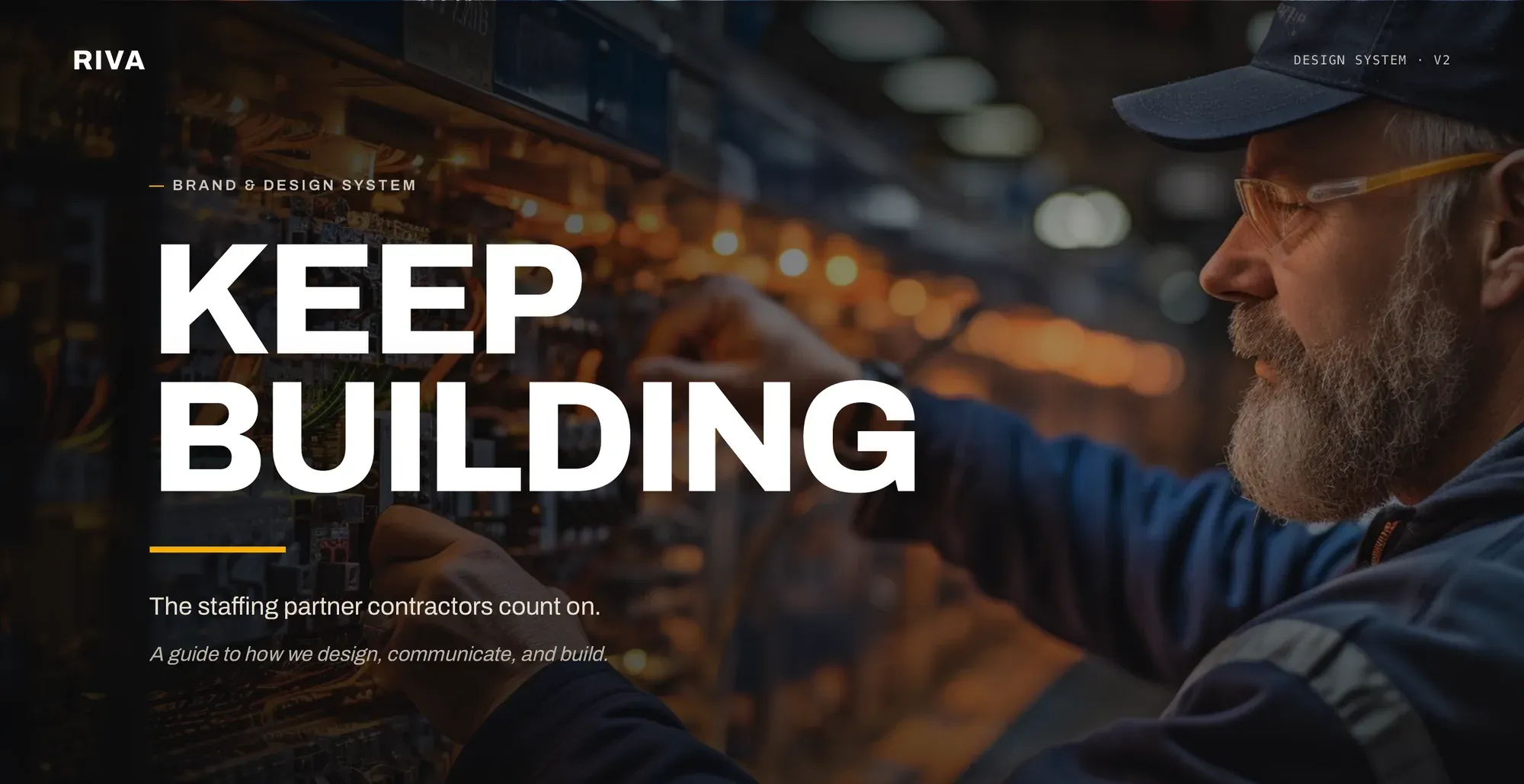
When we set out to build the Riva website, we didn’t start by asking AI to create a website.
We started by figuring out what we wanted to build.
That might sound obvious, but it’s a step I’ve shortcut plenty of times in the past. When you’re trying to get something launched, there’s a temptation to jump straight into execution. You have a general idea of what you want, start designing or writing, and make decisions along the way.
AI makes that temptation even stronger. You can generate a website in minutes. Why spend time working through strategy, positioning, design principles, and voice?
What I discovered is that AI also makes doing that upfront work dramatically easier.
And the work you do before building can make everything that follows faster and more consistent.
We started with conversations, not prompts
Riva is a skilled trades staffing company. My co-founder, Mike, brings years of experience working with contractors and understanding what matters to them.
I wanted that experience reflected in the brand.
So I interviewed Mike, transcribed our conversations, and used AI to help organize what we’d discussed.
We worked through the business, our customers, what makes a staffing company dependable, and what we wanted people to experience when working with Riva.
AI helped me explore ideas, challenge assumptions, and turn those conversations into a coherent strategy.
One important distinction emerged: contractors aren’t really looking for staffing. They’re trying to keep projects moving.
That became a guiding principle for the brand.
From thinking partner to design partner
Once we’d established the business strategy, I started working through the visual identity.
I used GPT to explore the brand voice and initial creative direction. Then I moved into Claude, bringing along the interview transcripts, competitive benchmarks, positioning work, and everything we’d learned.
Through a series of conversations, we developed a 26-page design system.
I call this Vibe Design.
I wasn’t pushing pixels around a design application. I was describing what I wanted, exploring alternatives, evaluating what Claude produced, and refining the direction through conversation.
We worked through typography, color, photography, layout, motion, brand personality, and interaction principles. The result was a comprehensive design system that reflected decisions we’d made along the way.
That doesn’t mean I abandoned traditional design. I still designed the logo by hand, although AI helped me brainstorm directions. And I created our printed collateral in InDesign.
But the website was different.
We took the design system, business strategy, and writing guidelines and used them as the foundation for building the site through AI-assisted development.
The website was both Vibe-designed and Vibe-coded.
Building the context before building the website
By the time we were ready to build, we had developed several working documents.
Our positioning explained the customer problem and what made Riva different. The design system established visual principles. The writing guide defined how we communicate, what language to avoid, and how to make decisions. A website roadmap and technical playbook established what to build and how we’d evaluate it.
These weren’t simply creative preferences.
They were decisions we could reference and reuse.
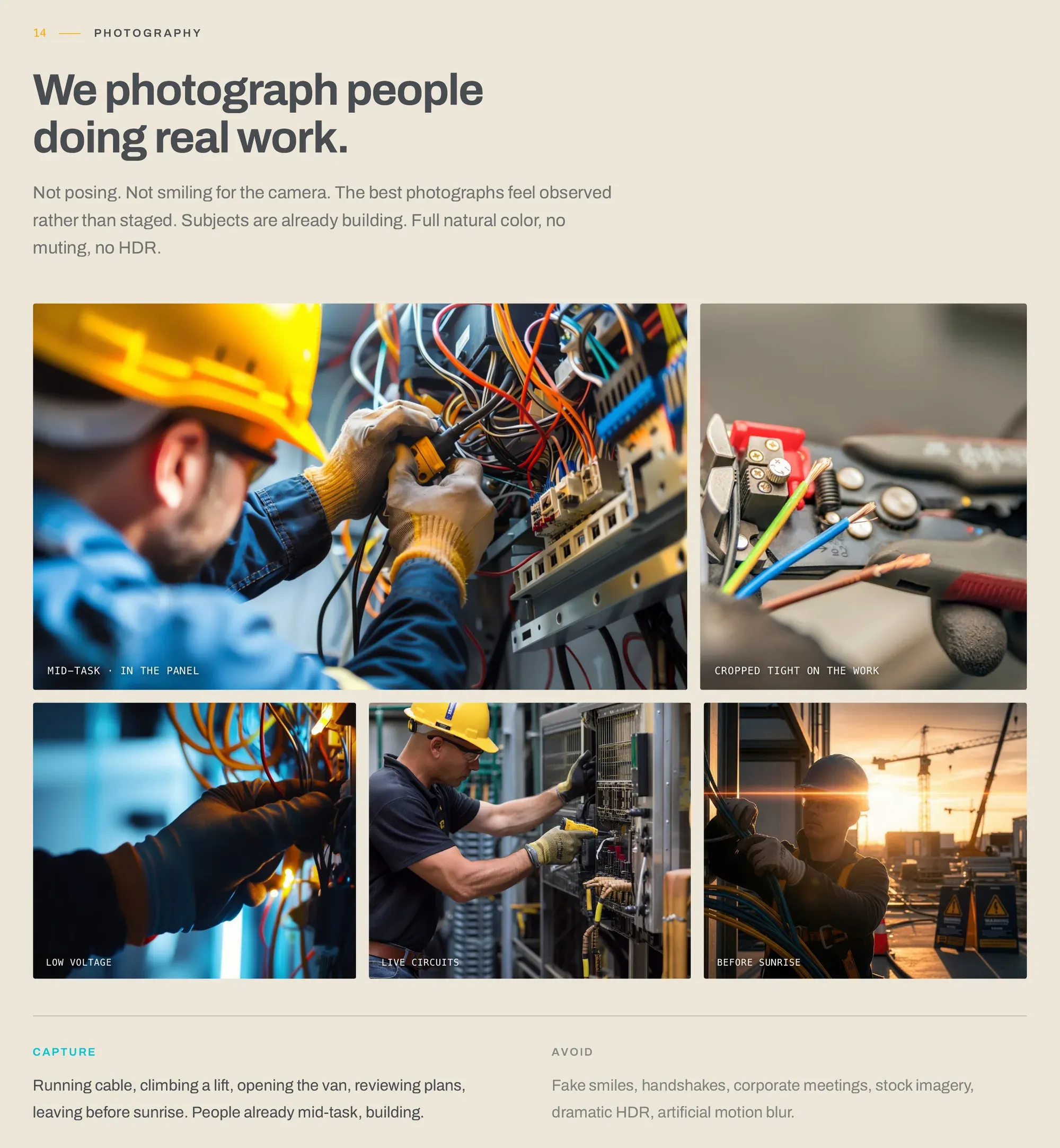
For example, we established that the brand should communicate quiet confidence. Photography should show people doing real work rather than posing for the camera. Technology should support the customer experience rather than dominate the story.
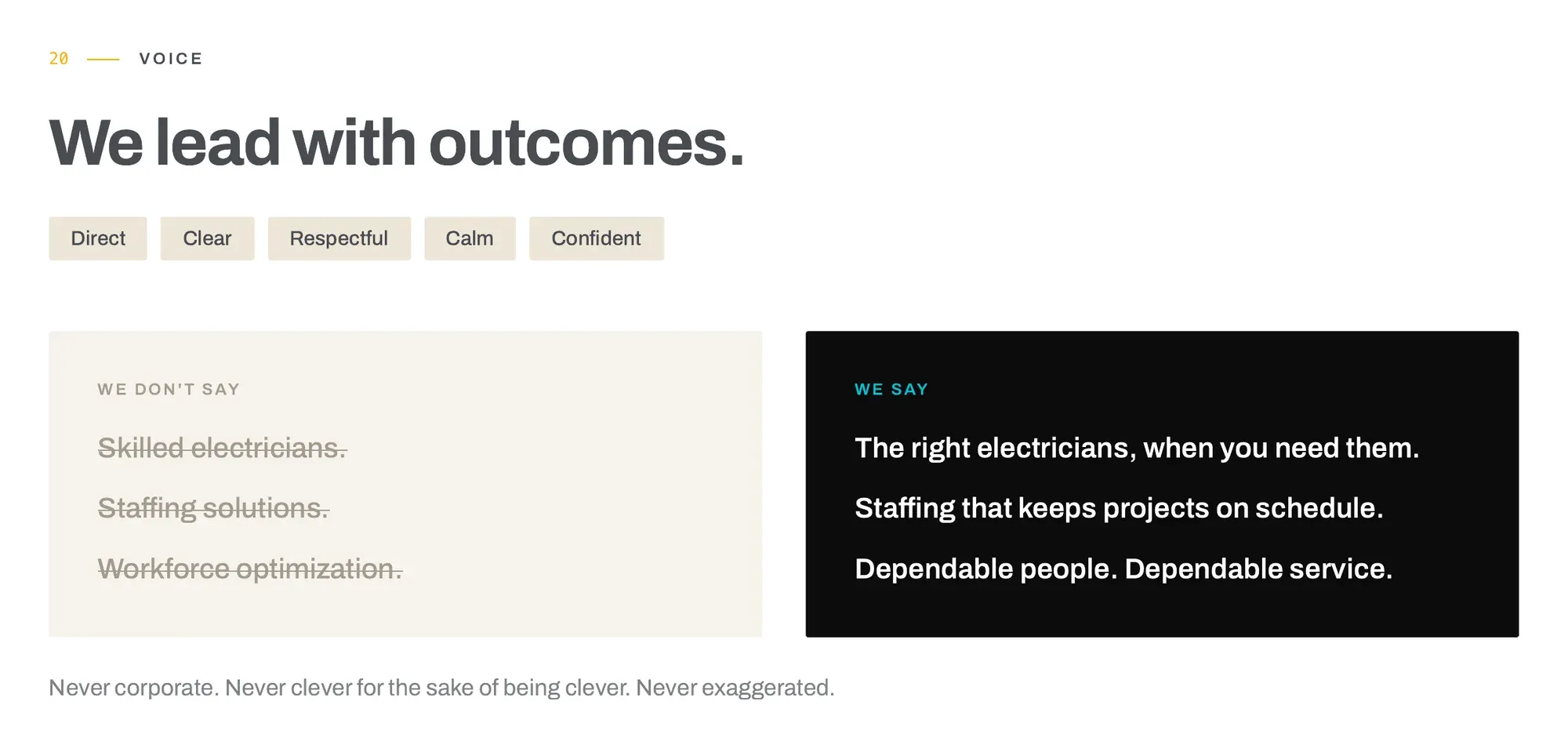
Our writing guidelines emphasized customer outcomes, plain language, and specific behaviors instead of generic marketing claims.
Then I loaded those materials into the working context and asked Claude and GPT to interview me, identifying gaps and asking questions before we moved into development.
Instead of expecting AI to infer what we wanted, we used it to help uncover what we hadn’t decided yet.
That made the actual website build much more straightforward.
The first version wasn’t quite right
Even with all that preparation, the first version of the website wasn’t entirely on-brand.
Some of the design and writing didn’t reflect the principles we’d established.
But correcting it was much easier because we had something specific to refer to.
Rather than saying, “This doesn’t feel right,” I could point to the design system or writing guide and explain what needed to change.
We’d already made many of the important decisions.
The work became less about figuring out what we wanted and more about bringing the implementation into alignment with it.
The context didn’t eliminate iteration. It made iteration more directed.
A prompt is not the same as context
A prompt tells AI what to do.
Context helps AI understand the environment in which that work needs to happen.
Context engineering is deciding what AI needs to know about your business, capturing it, and making it available whenever work happens.
That context might include business strategy, customer research, brand guidelines, examples of good work, constraints, past decisions, or operational knowledge.
The distinction matters because much of what makes work good isn’t contained in the immediate request.
If I ask AI to write a homepage, it can produce something plausible.
But if it understands our customers, our positioning, our voice, our design principles, and what we’re deliberately trying to avoid, it has a much better foundation for making useful decisions.
And those decisions don’t need to be explained again every time we start a new task.
Context captures judgment
This may be the most important thing I learned.
A good knowledge base or set of guidelines isn’t simply a collection of information.
It contains decisions.
Why we chose one direction over another. What we believe matters. What good work looks like. What we don’t want to do.
Those decisions represent judgment that has already been exercised.
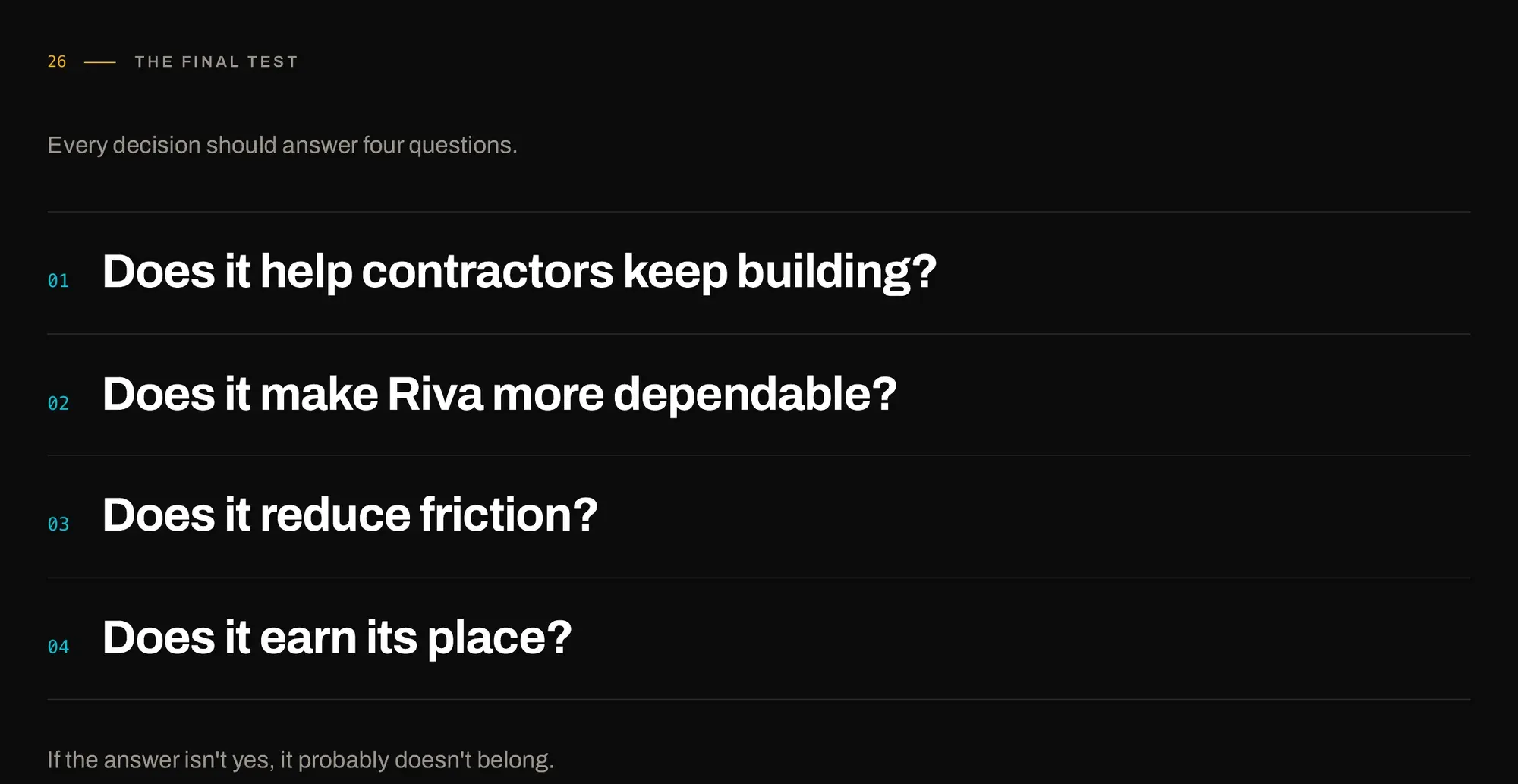
When we make that judgment available to AI, we’re not asking it to replace our thinking. We’re giving it the benefit of thinking we’ve already done.
There’s another benefit: that knowledge isn’t locked inside a particular AI conversation or model.
GPT helped me explore the brand. Claude helped develop the design system. The accumulated documents then informed the website build.
The context provided continuity across tools and stages of work.
And as the business evolves, those documents can evolve with it.
What this means for AI adoption
I think there’s a broader lesson here for organizations adopting AI.
A lot of training focuses on getting better at prompting. That’s useful, but it only goes so far.
People also need to learn how to prepare AI to work effectively within their business.
That means understanding what knowledge matters, capturing useful decisions, establishing standards, and making that context available when work happens.
It also means knowing when the output is wrong and having a basis for correcting it.
The goal isn’t to eliminate human judgment.
It’s to make that judgment more useful, more consistent, and easier to apply across the organization.
From the first brand conversations to a complete website took about ten business days: roughly four for the design system and five for the website.
Looking back, the most valuable part of our website project wasn’t how quickly AI helped us build the pages.
It was that we developed a clearer understanding of our business along the way, captured that understanding, and then used it to guide the work.
The better the context, the less you have to start over.